
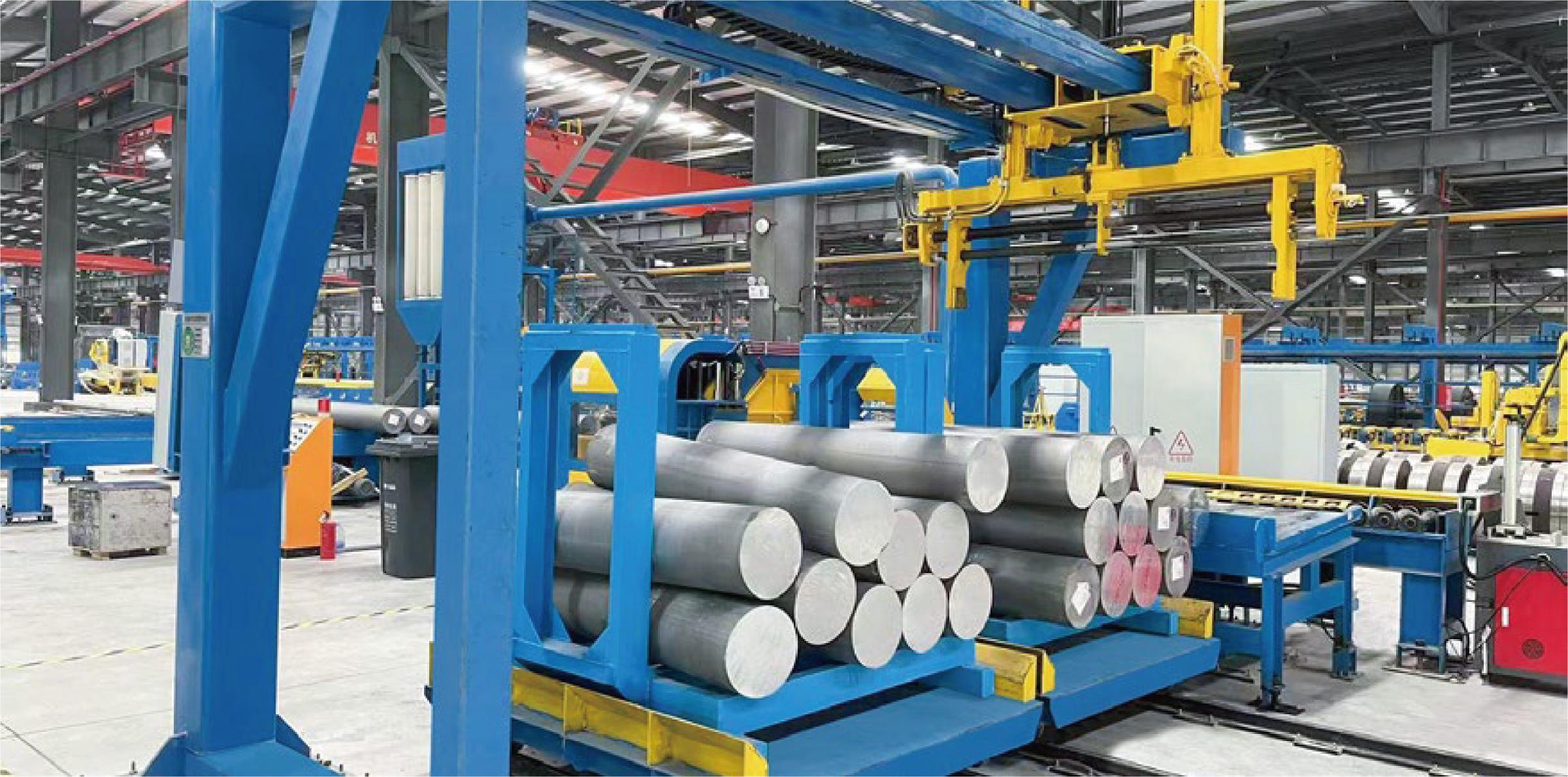
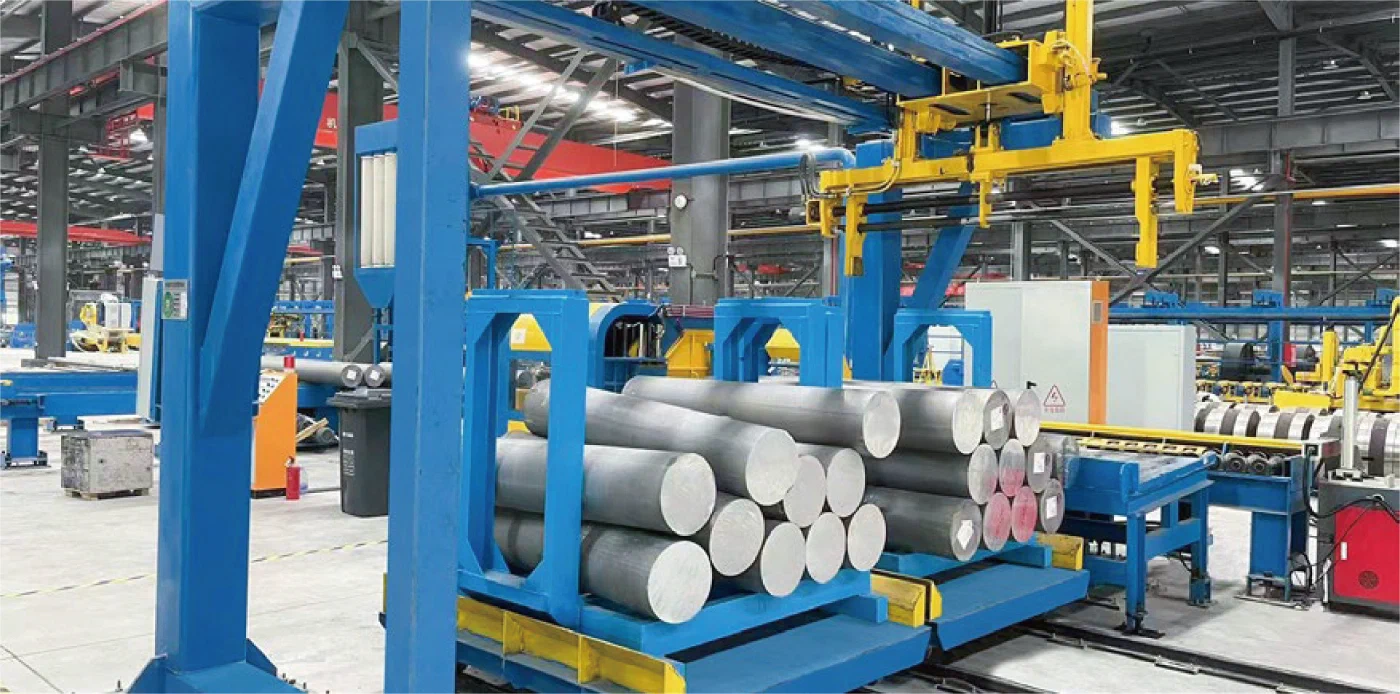
An automatic single-billet sawing system for casting and extrusion shops, designed to work with single-billet furnaces and multiple extrusion presses.
Process role#
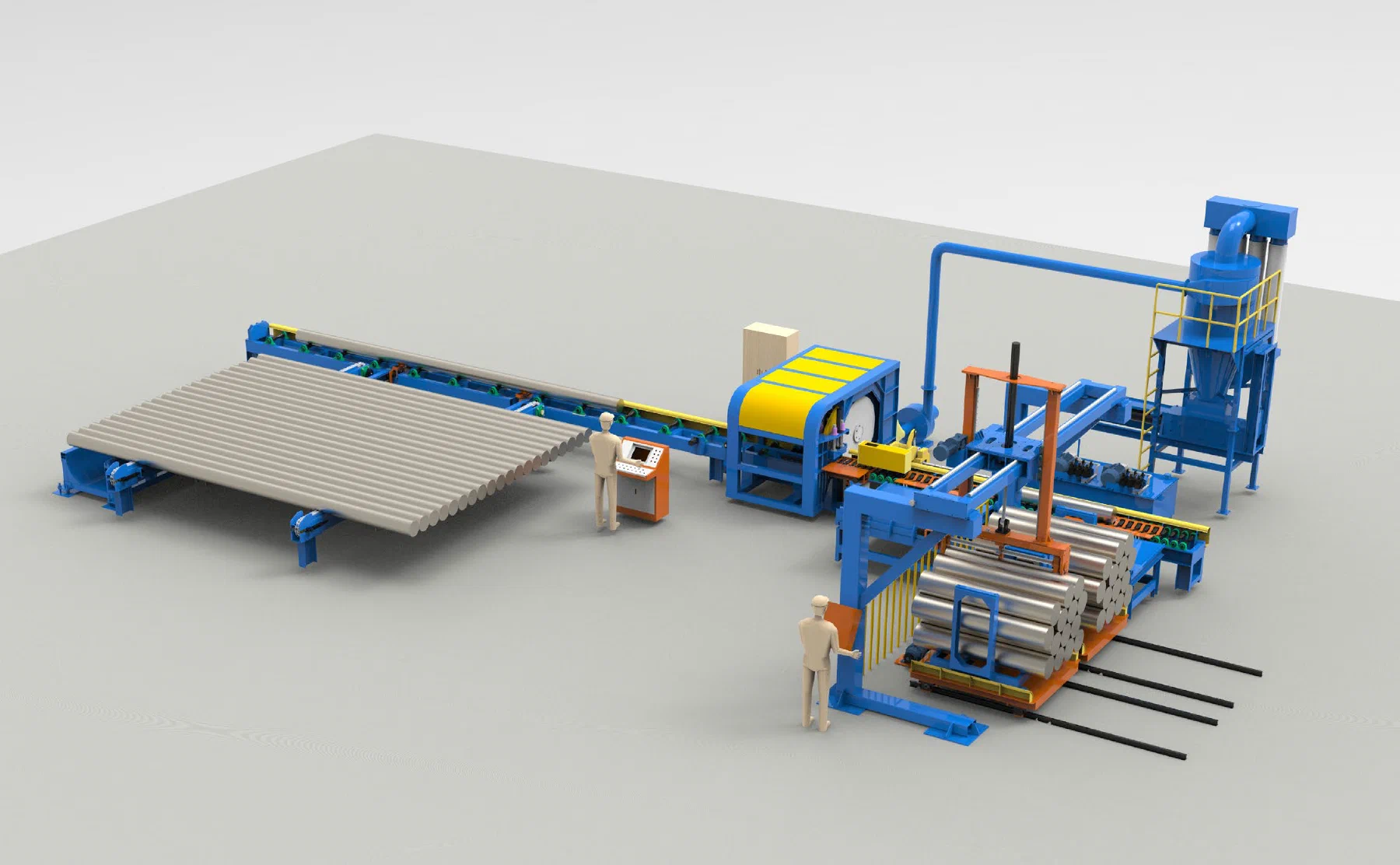
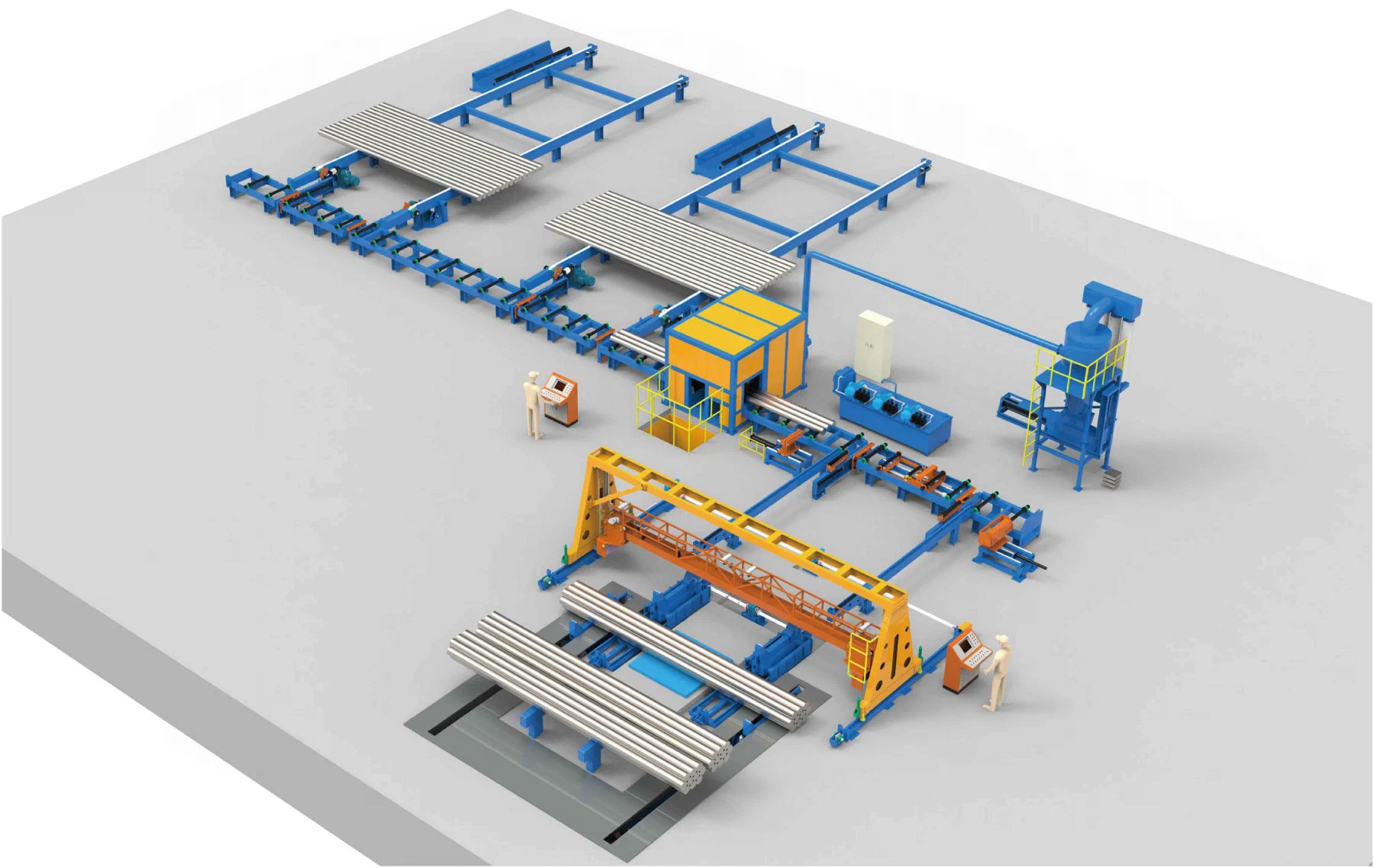
The single-billet cell moves one billet through feeding, cut-to-length positioning, clamping, sawing and discharge. It can interface with billet heaters, extrusion presses or a dedicated single-billet logistics route, with configuration defined from billet size, cut schedule, cycle time and adjacent elevations.
Operating sequence#
- Receive one billet from storage or upstream equipment.
- Feed the billet to the encoder-based cut-length position.
- Clamp the billet and perform controlled-feed sawing with blade lubrication.
- Separate the finished cut, head piece or sample and transfer it downstream.
Key technical data#
| Length positioning | Encoder feedback and controlled feeding, with datum and tolerance defined by billet condition and project acceptance requirements. |
|---|---|
| Saw feed | Continuously adjustable hydraulic feed set to alloy, billet diameter and cutting load. |
| Operating modes | Automatic mode for production and manual mode for setup, changeover and controlled fault recovery. |
Configurable scope#
- Single-billet storage, loading and alignment
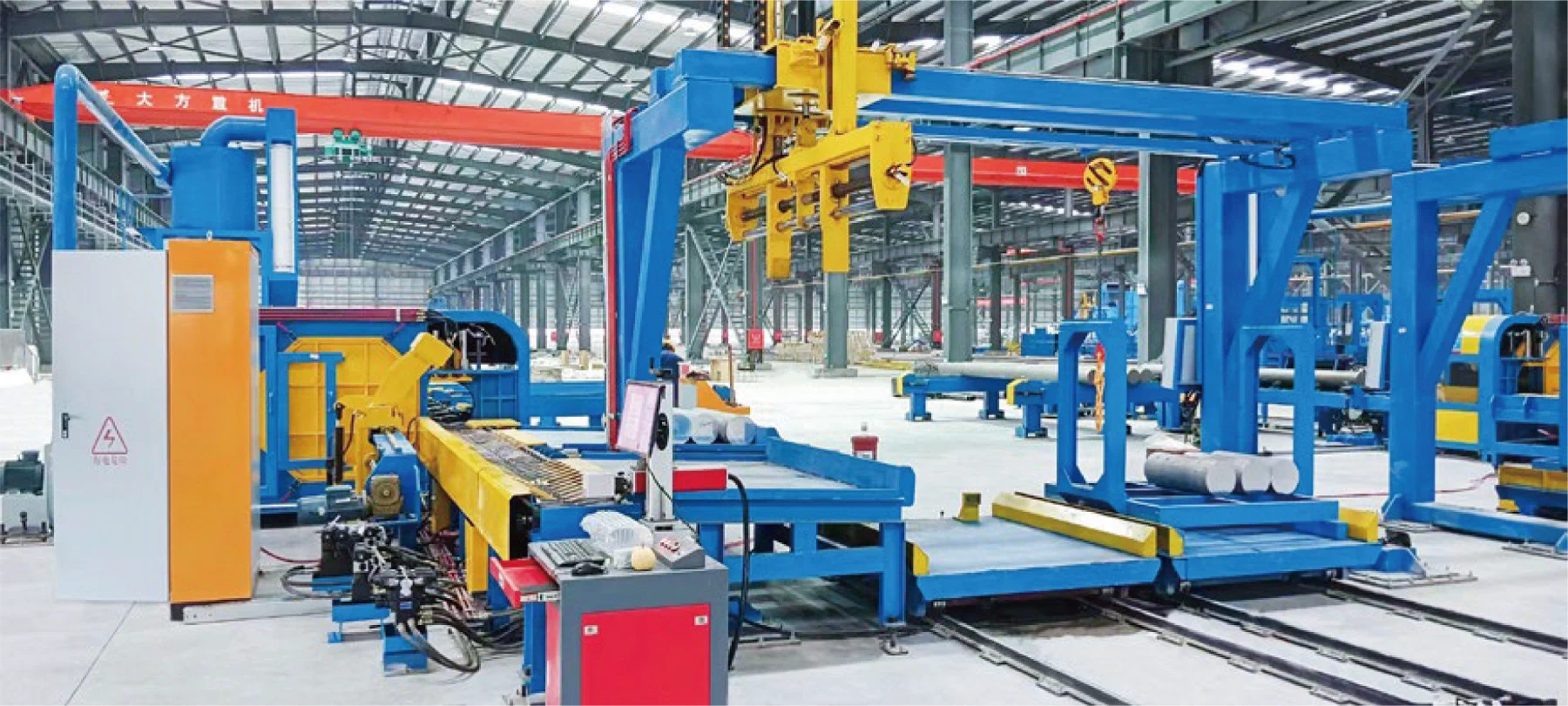
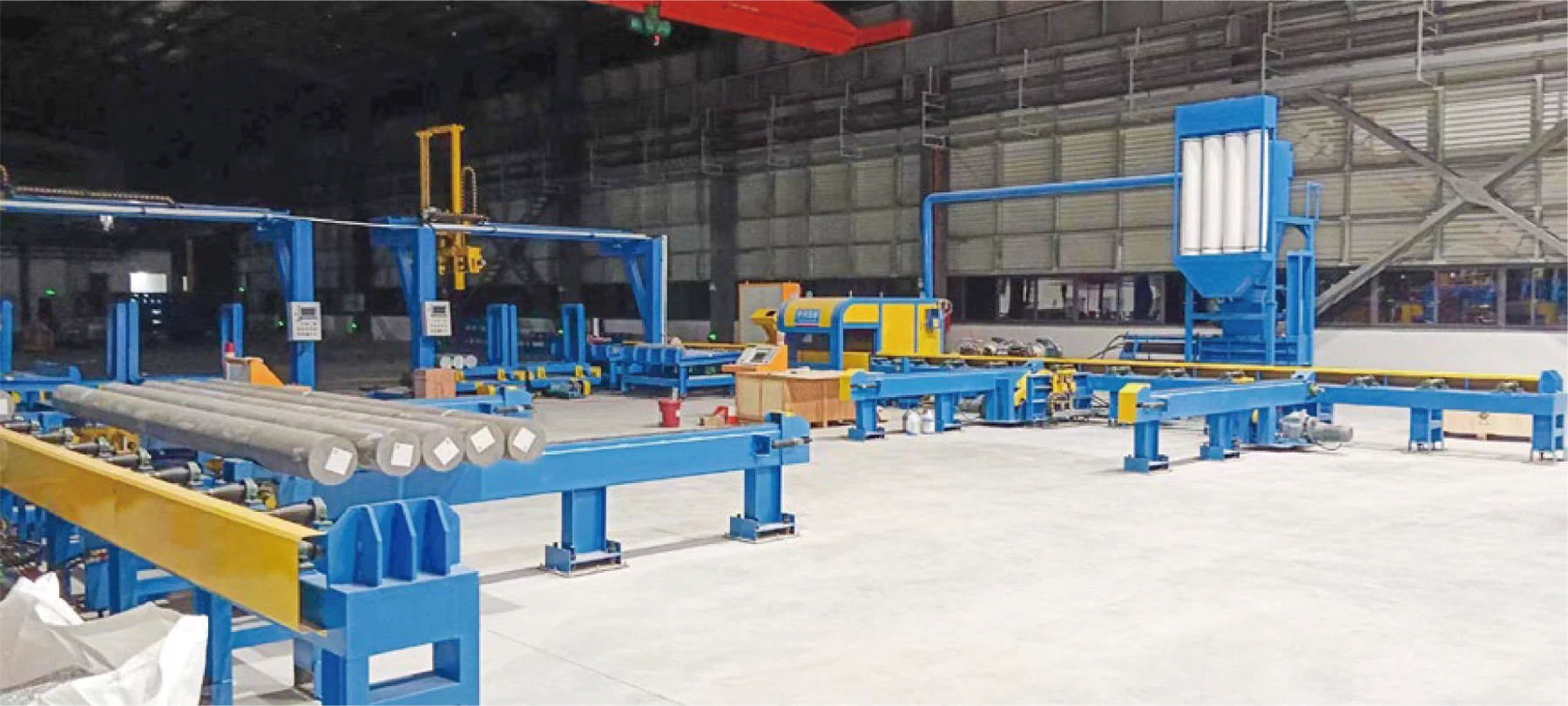
- Cut-to-length feeding, clamping and enclosed sawing module
- Head, tail and sample collection
- Finished-product conveying, identification and chip-recovery interfaces
Information required for selection#
- Billet alloy, diameter, incoming length and straightness
- Target cut lengths, permitted tolerance and sampling requirements
- Production rhythm, shift pattern and changeover frequency
- Loading method, finished-product destination and adjacent-equipment elevations
- Control signals, safety boundary and maintenance access
Equipment video#
Additional equipment views#
Configure the equipment around your operating conditions
Tell us about the feed, required capacity, plant interfaces and project schedule.