
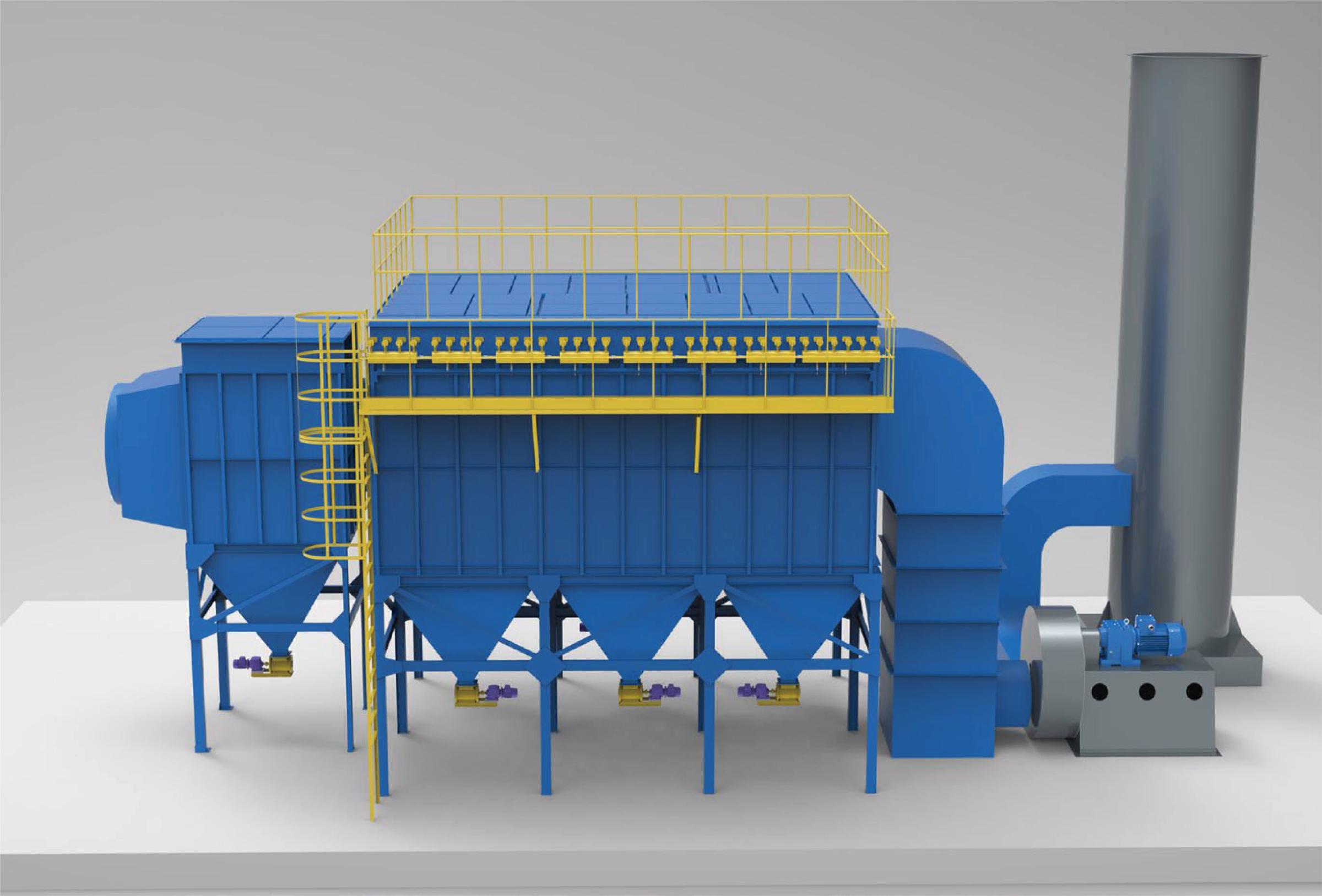
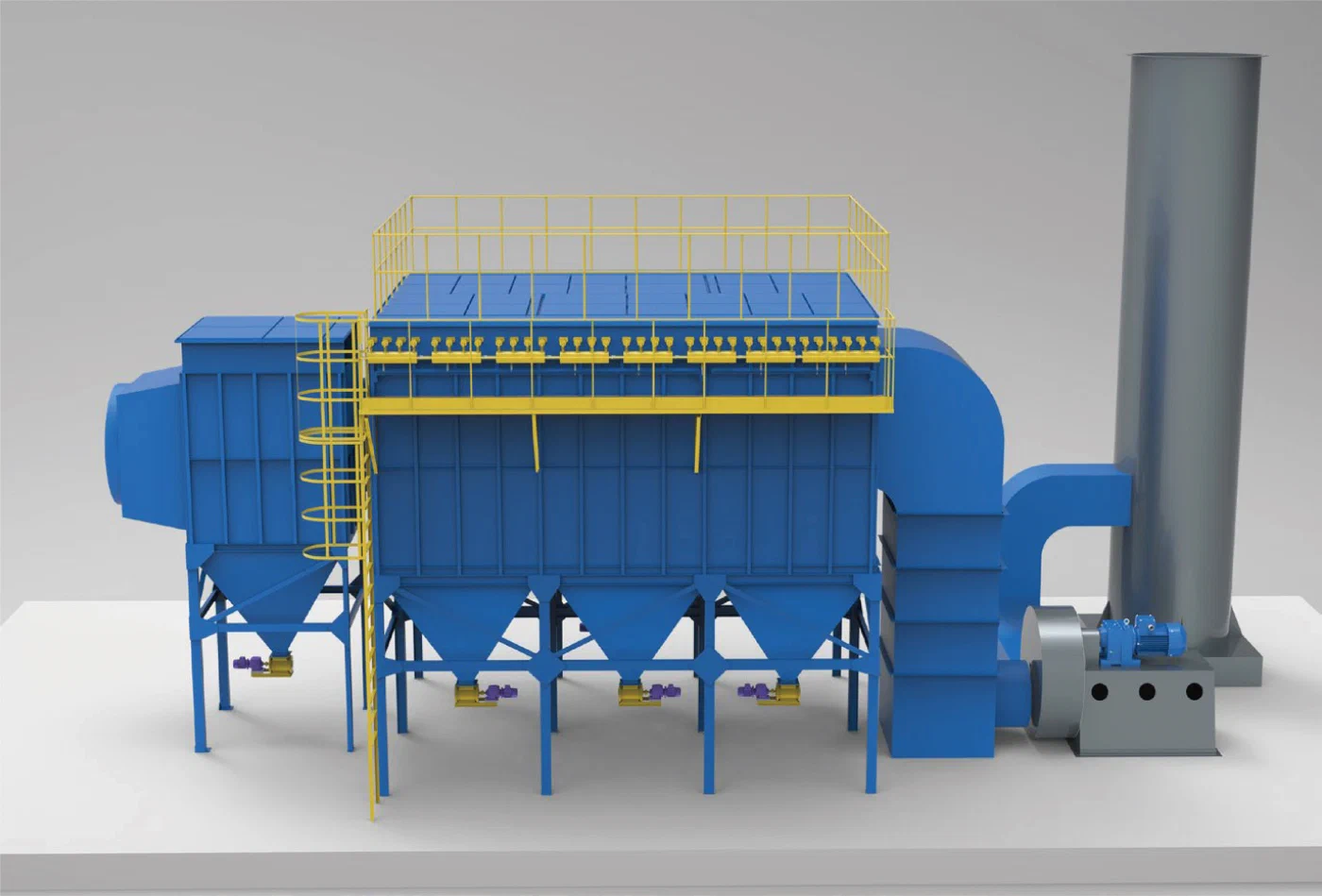
A fume- and dust-control system for casting, dross processing, crushing, screening and sawing sources, covering source capture, balanced ducting, bag filtration, cleaning and dust discharge.
Process role#
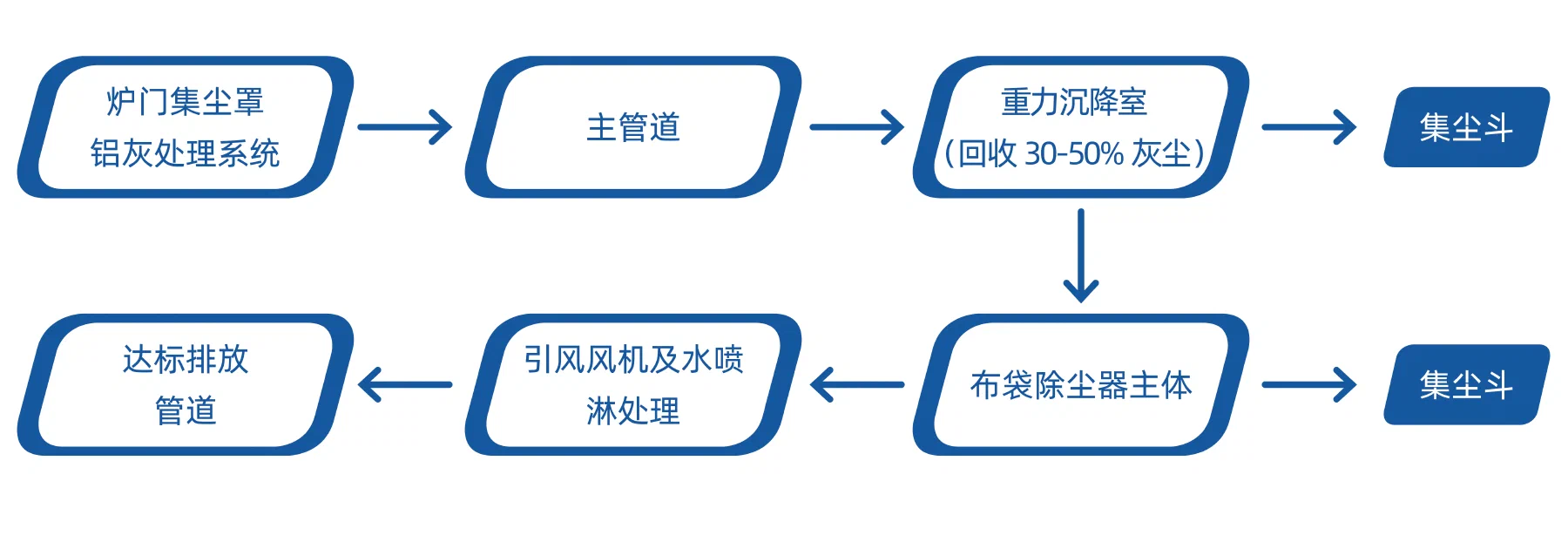
Dust-control design starts at the emission point and capture hood. Dust-laden gas moves through balanced branches and main ducting into the filter, where inlet flow control reduces local velocity and filter bags retain fine particulate before cleaning and hopper discharge remove the collected material.
Operating sequence#
- Capture fume and dust close to the source with a hood or local enclosure.
- Balance airflow across operating points through branch and main-duct resistance control.
- Distribute inlet flow and, where required, pre-separate part of the coarse particulate.
- Collect fine particulate on filter bags and initiate pulse cleaning by differential pressure or time.
- Use offline compartment cleaning to reduce re-entrainment, then discharge collected material through the hopper system.
Key technical data#
| Cleaning control | PLC pulse cleaning triggered by differential pressure or time, with automatic and manual modes. |
|---|---|
| Maintenance | Top-access bag replacement from the clean-air side, with inspection, dust-discharge and maintenance access. |
| Temperature protection | Temperature sensing, controlled cold-air dilution and staged over-temperature protection where required by the gas condition. |
Configurable scope#
- Capture hoods, local enclosures and extraction branches
- Main ducting, dampers and network resistance balancing
- Inlet distribution, pre-separation and temperature-control stages
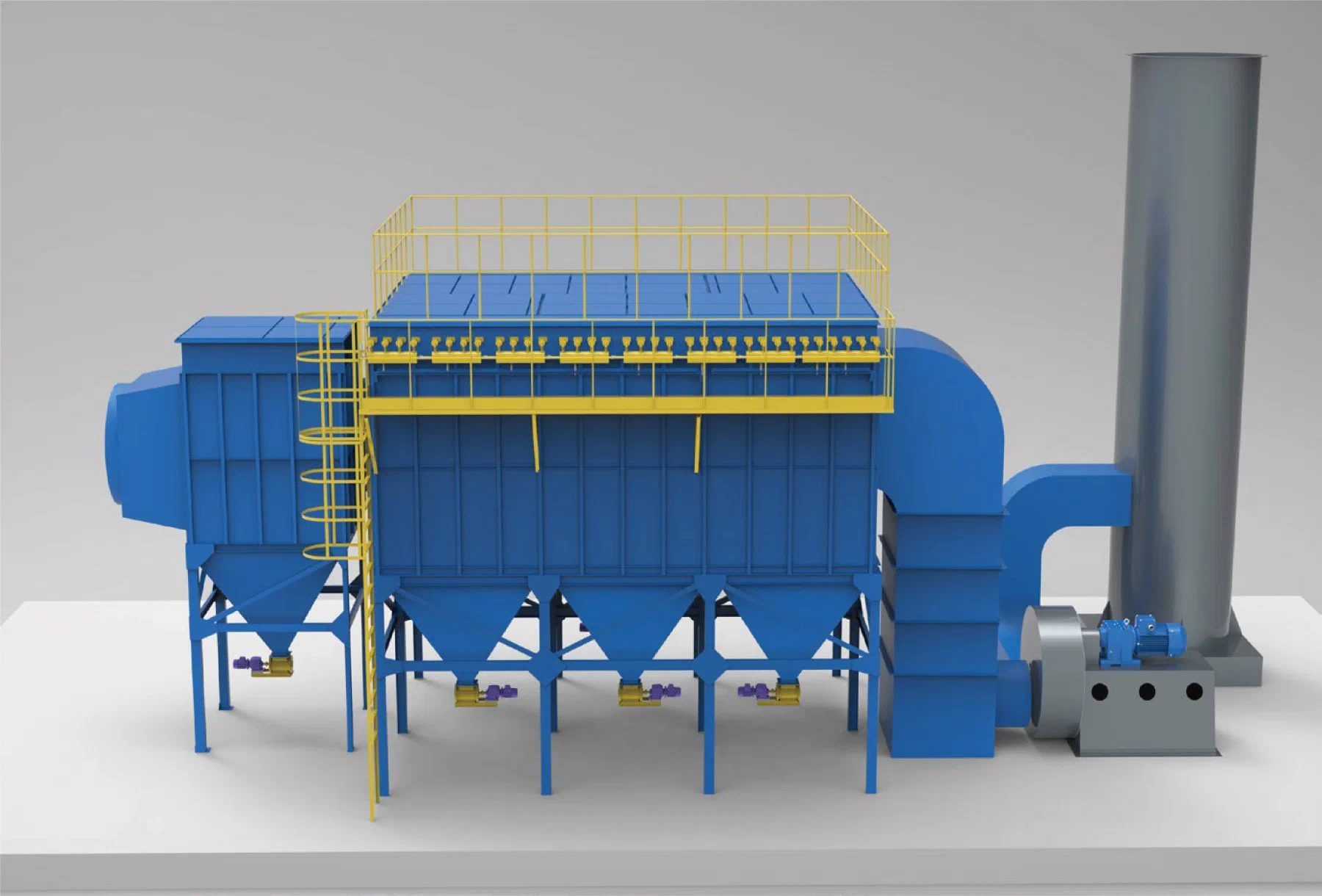
- Filter bags, pulse cleaning, hoppers and dust-discharge equipment
- Fan, compressed air, differential-pressure monitoring and equipment interlocks
Information required for selection#
- Emission-point locations, capture-hood geometry and simultaneous operating combinations
- Normal and peak gas volume, temperature, moisture and composition
- Dust concentration, particle size, adhesion, corrosion and fire risk
- Available pressure drop, plant space, fan and stack conditions
- Dust discharge, storage and collected-material handling
- Local emission, noise and acceptance requirements
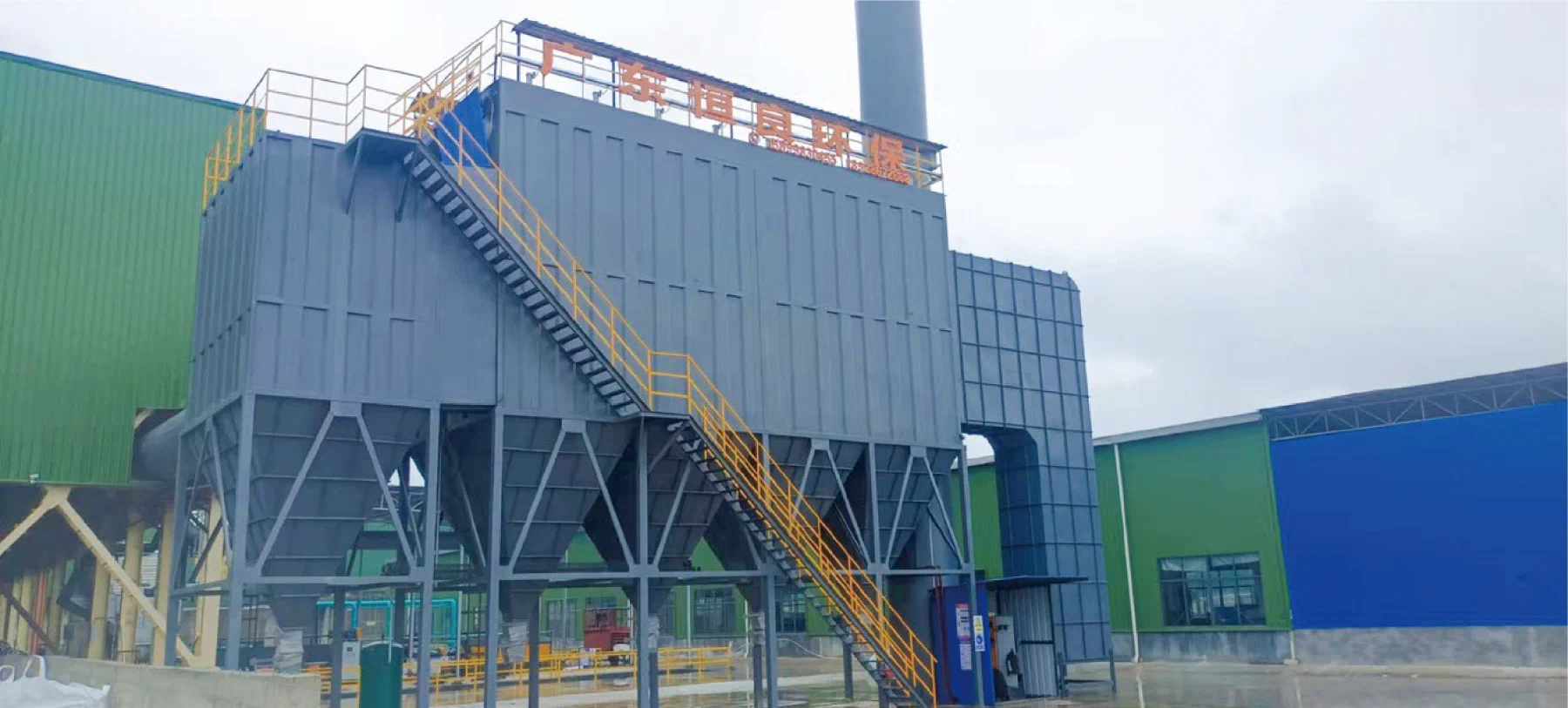
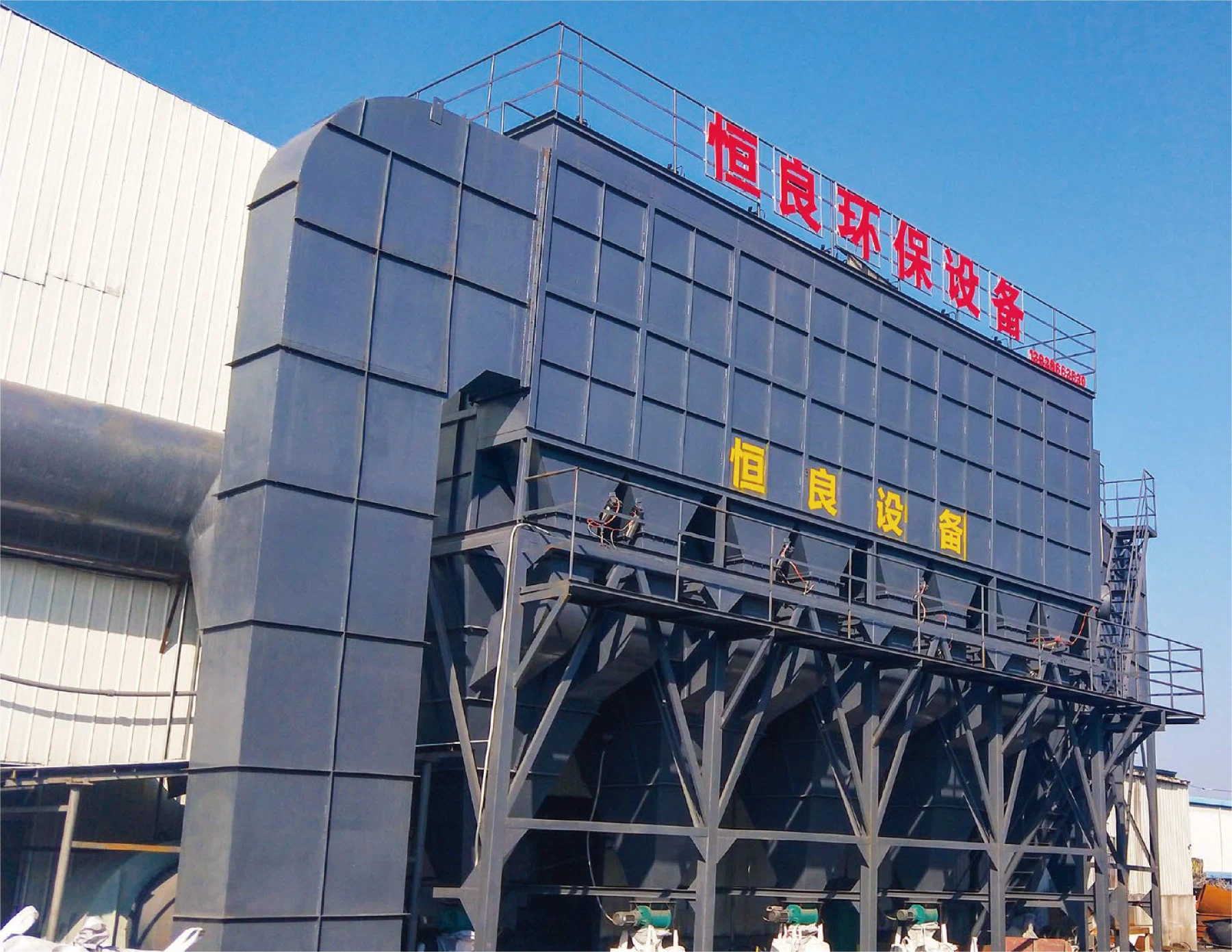
Additional equipment views#
Configure the equipment around your operating conditions
Tell us about the feed, required capacity, plant interfaces and project schedule.