
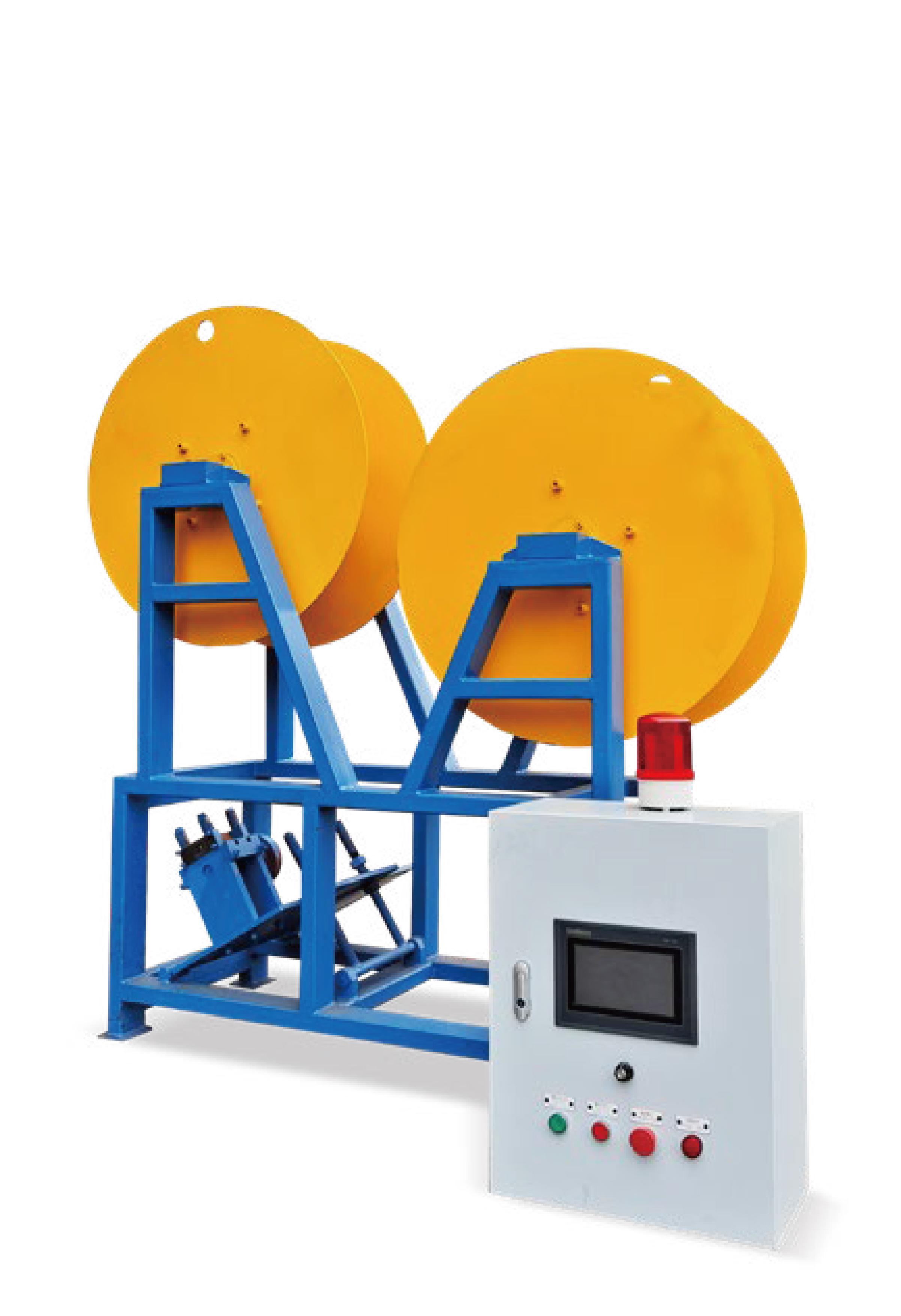
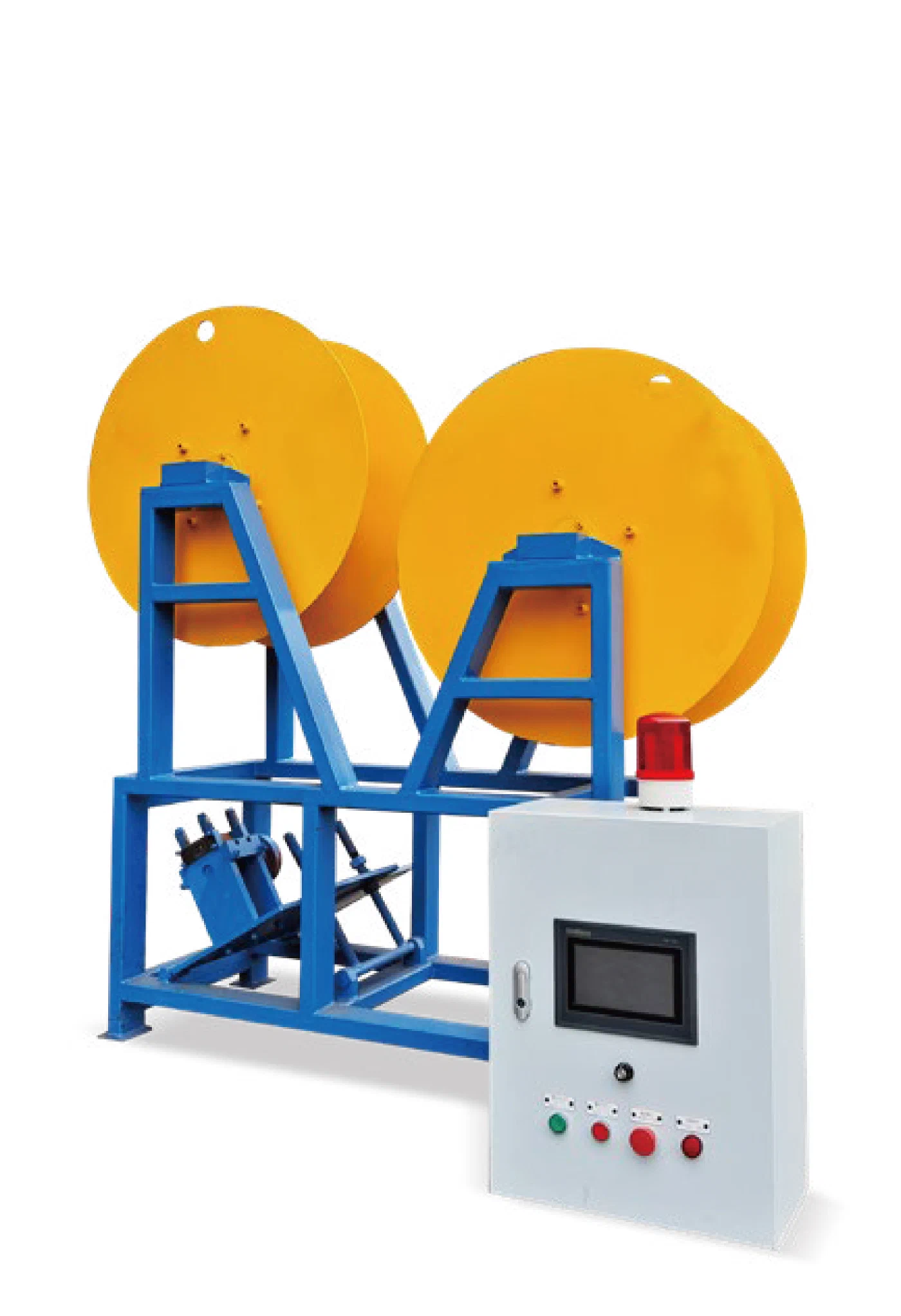
Feeds Al-Ti-B rod online during casting, using controlled feeding and status monitoring to maintain a consistent addition rhythm.
Process role#
A motor, reducer and spring-loaded feed rollers create a continuous feed path, while encoder feedback monitors actual feed. Automated configurations use PLC/HMI control to manage speed and detect slip or feed interruption.
Operating sequence#
- Pay off Al-Ti-B rod from a single- or dual-reel frame.
- Establish controlled feeding through spring-loaded guide and feed rollers.
- Adjust speed with the variable-frequency drive and monitor movement with encoder feedback.
- Detect slip or feed interruption and deliver the rod to the molten-aluminum process point.
Key technical data#
| Arrangement | Single- or dual-reel arrangements; dual channels can operate independently. |
|---|---|
| Drive power | 0.75 kW. |
| Typical feed range | 1.1–1.8 m/min; final range is confirmed to reel arrangement, rod and control configuration. |
| Feed monitoring | Encoder feedback with configurable slip and feed-interruption alarms. |
Configurable scope#
- Single- or dual-reel independent feed channels
- Variable-frequency drive, encoder feedback and PLC/HMI control
- Spring-loaded guide and feed mechanism
- Slip, feed-interruption and operating-status alarms
Information required for selection#
- Al-Ti-B rod diameter, reel geometry and reel mass
- Alloy, required addition rate and production rhythm
- Single- or dual-reel layout and channel-change method
- Feed distance, addition point and site control interface
Configure the equipment around your operating conditions
Tell us about the feed, required capacity, plant interfaces and project schedule.