
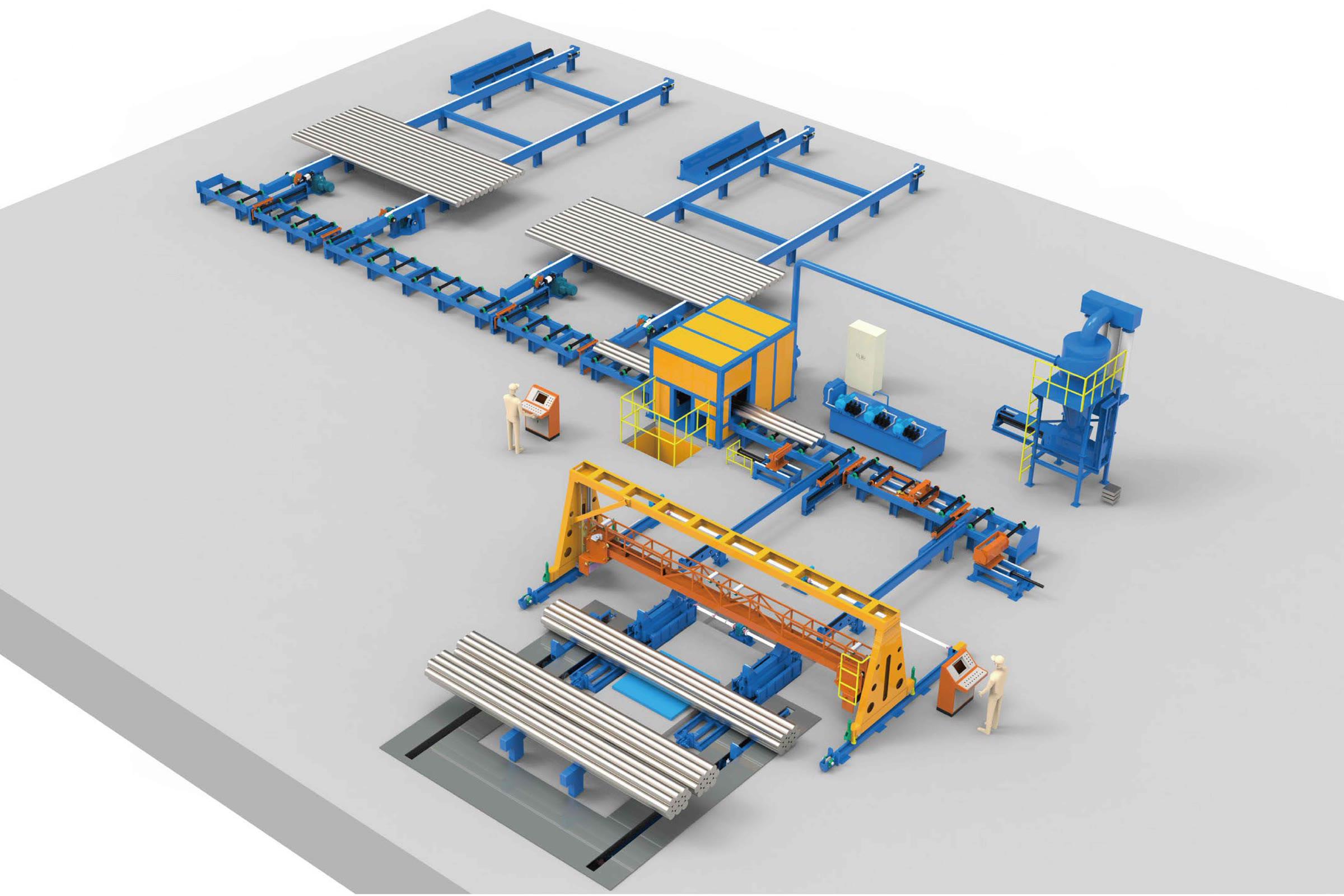
The line is configured around billet alloy, diameter and length range, cut schedule, required throughput and the way finished billets enter homogenizing, extrusion, packing or warehouse logistics.
Typical operating sequence#
- Store, align and separate incoming billets.
- Load and feed to the cut position.
- Saw to the confirmed length schedule.
- Mark billets and recover generated chips.
- Convey, sort and stack finished billets.
Configurable modules#
Compare single-billet and multi-billet sawing systems when defining the line arrangement. Supporting modules include:
- Chain storage, arc alignment and billet separation
- Rubber-coated V rollers and servo cut-to-length feeding
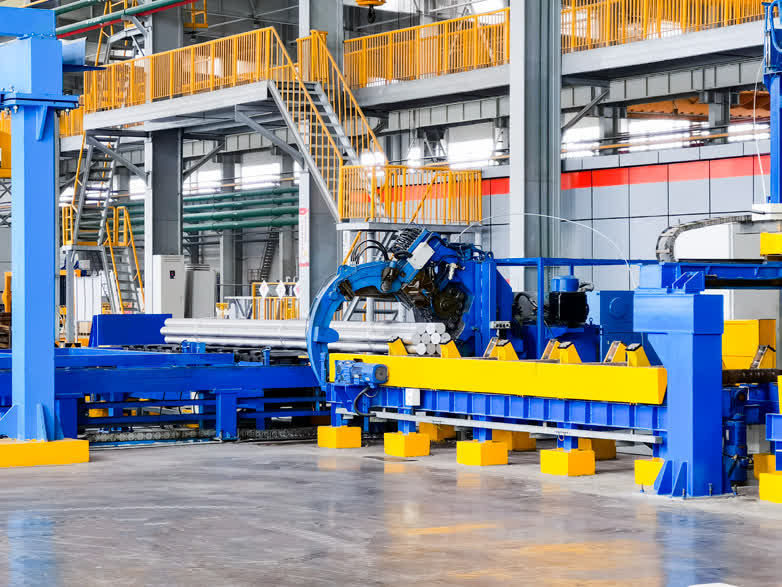
- Enclosed modular saw frame with oil-immersed cutting spindle
- Minimum-quantity lubrication and head/tail collection
- Pin, laser or multi-pin identification
- Aluminum chip recycling, covering the collection and handling route; see the chip collection and briquetting system for the configured extraction, compaction and discharge arrangement
- Long-billet, short-billet or homogenized-billet stacking
- PLC sequence control, safety interlocks and production interfaces
Controls and system boundary#
| Line arrangement | Select single- or multi-billet sawing from the billet mix, billets per cycle and downstream logistics, then calculate the cycle time of each station. |
|---|---|
| Length positioning | Controlled feeding with encoder feedback; datum, tolerance and acceptance method are defined from billet condition and project requirements. |
| Chip route | Configure extraction, centralized collection, briquetting and downstream conveying from chip form, travel distance and remelt route. |
| Control platform | PLC sequence control and HMI coordinate station sensors, equipment interlocks, automatic operation and manual recovery. |
| Marking options | Automatic pin, laser or multi-pin marking according to traceability requirements. |
Capacity calculation: required output is converted into cycle time and checked against billet diameter, batch mix, cuts per billet, handling distance, stacking pattern, shift schedule and equipment availability.
Information required for configuration#
Provide billet alloy, diameter and length range, cut list and tolerance, shift output, loading method, finished-billet destination, chip-handling requirement, available floor plan, crane conditions and upstream/downstream control signals.
Map the billet flow before selecting the saw configuration
Tell us about the billet range, cut plan, production rhythm and plant logistics.