
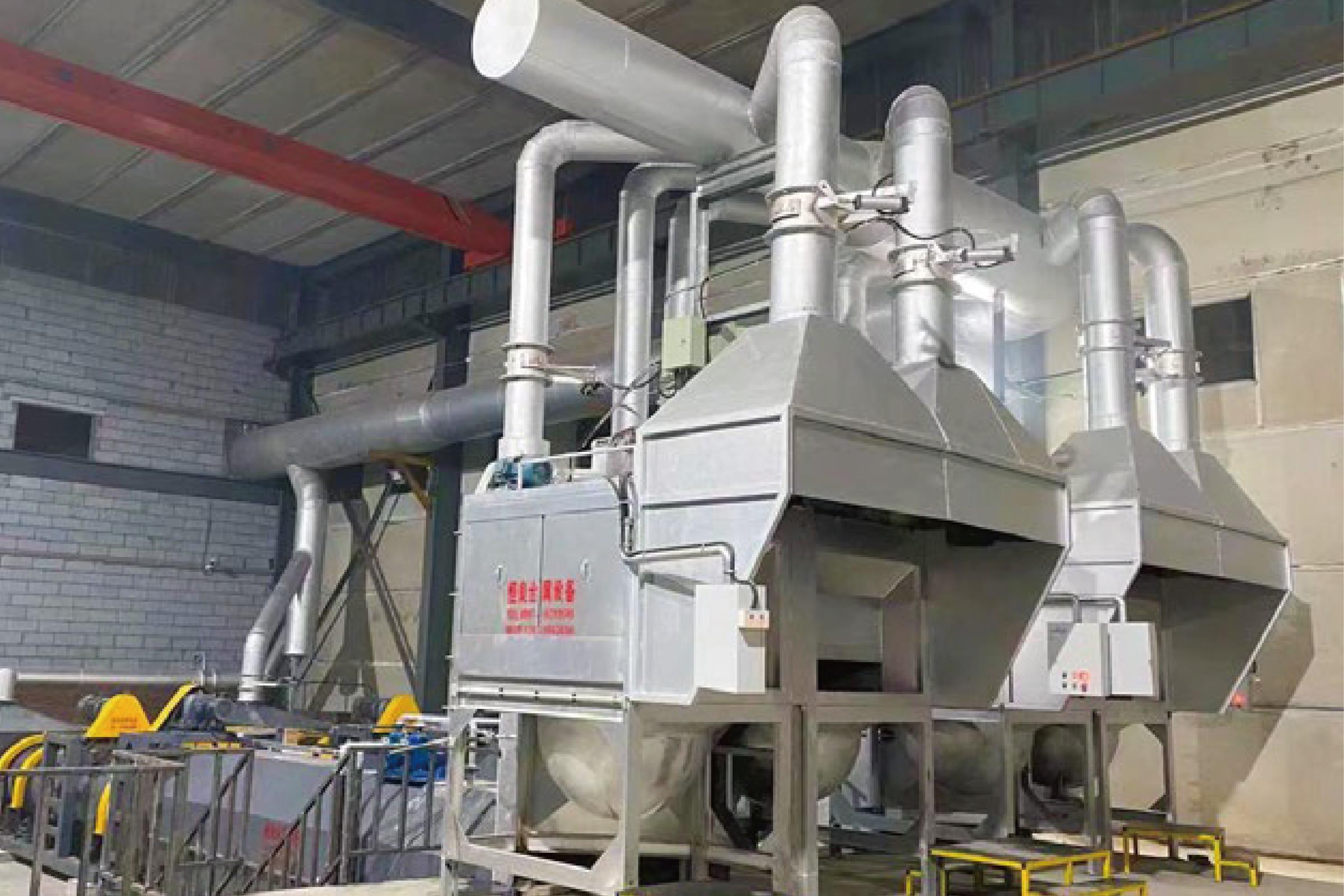
A dust collector is only one part of the system. Capture efficiency begins at the hood and depends on source position, thermal plume, enclosure, capture distance, duct resistance and the number of points operating at the same time.
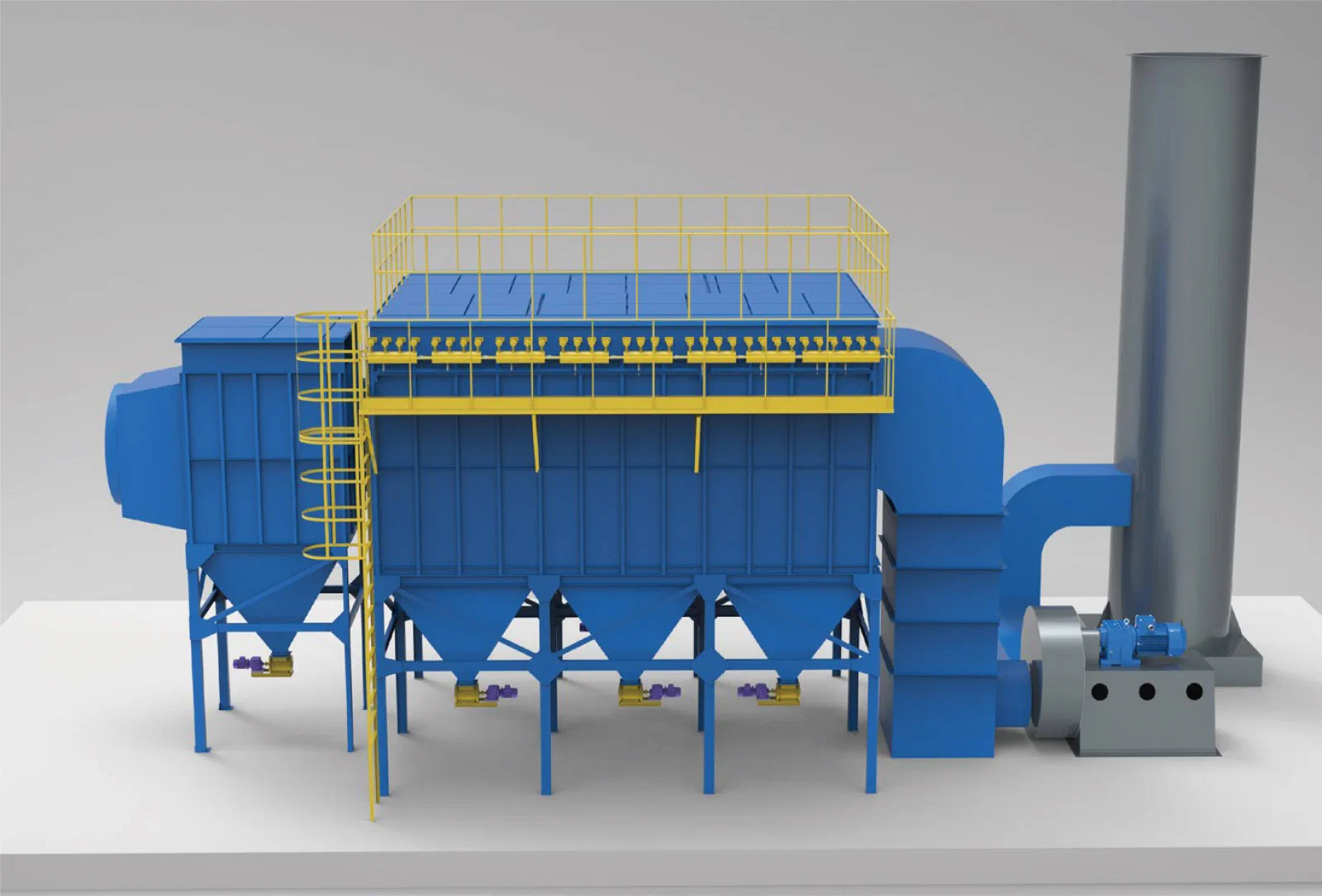
System path#
- Capture dust and fumes close to the source.
- Convey through balanced branch and main ducts.
- Reduce temperature or settle coarse particles where required.
- Filter through a pulse-jet baghouse.
- Discharge, convey and package collected dust.
Engineering scope#
- Hoods and partial enclosures for furnace doors, dross, crushing, screening and sawing points
- Branch and main duct routing with resistance balancing
- Gravity settling or temperature-control stages where the process requires them
- Pulse-jet baghouse, filter media, hopper and rotary discharge equipment
- Induced-draft fan, compressed air, differential-pressure monitoring and interlocks
- Maintenance platforms, inspection access and collected-dust handling
Design inputs#
| Dust data | Composition, particle size, concentration, temperature, moisture, explosibility and corrosiveness. |
|---|---|
| Operating points | Source position, hood arrangement, capture distance and simultaneous operating combinations. |
| System conditions | Existing duct route, available pressure, compressed air, discharge method and maintenance access. |
| Compliance basis | Project location, applicable emission limit and agreed acceptance test method. |
Pre-treatment stage: gravity settling or another pre-separation stage is selected from particle size, concentration, temperature, duct velocity and filter loading. A node value from one project is not used as a product-wide performance statement.
Output of engineering#
The confirmed data is used to calculate extraction volume, system resistance, filtration area, fan duty and discharge arrangement. Final emissions performance is tied to the agreed source conditions, operating mode and local requirements.
Start with the dust sources and operating pattern
Tell us about the process, dust characteristics and applicable emission requirements.